
'I don't really expect the August increase in food prices, which was close to 6 per cent, to persist as we go close to the end of this year.'
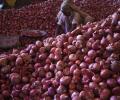
India's retail inflation surged to 5.54 per cent in September, primarily due to a significant increase in onion and other food prices, remaining just within the Reserve Bank of India's tolerance band. This marks the highest inflation since the new series with base year 2024 took effect in January.

India's wholesale price index (WPI) inflation marginally eased to 9.78 per cent in July 2026, down from 9.87 per cent in June, primarily due to a cooling in the prices of fuel, power, and food items, marking the first month-on-month drop under the new 2022-23 base year.

India's retail inflation, measured by the Consumer Price Index (CPI), rose to 4.45 per cent in July, up from 4.38 per cent in June, primarily due to higher food prices, particularly onions and ginger. This marks the second consecutive month the inflation rate has remained above the Reserve Bank's median target.

India's wholesale price-based inflation surged to 11.39 per cent in September, up from 9.92 per cent in August, primarily driven by increasing prices of food, manufactured items, and fuel and power.

'The priority of the government should be to use agricultural production for human beings first, and only after that for biofuel and such things.'

India's Wholesale Price Index (WPI)-based inflation climbed to 12.29 per cent in October, primarily due to increased prices of fuel and power, food articles, minerals, and non-food items, marking a significant rise from September's 11.39 per cent.

'If the temperature remains very high, which is likely to be the case because of El Nino, it may lead to a shortfall in wheat production.' 'If that happens, we will be in a very, very difficult situation as far as food security is concerned.'
India's retail inflation surged to a two-year high of 6.09 per cent in October, driven by costlier food items, breaching the Reserve Bank of India's upper tolerance limit of 6 per cent for the first time since October 2024.

Economists anticipate the Reserve Bank of India (RBI) will increase the repo rate by another 50-75 basis points, pushing the terminal rate to 6-6.25 per cent, as retail inflation surpassed the central bank's 6 per cent tolerance limit in October.

India's wholesale price-based inflation (WPI) increased to 9.92 per cent in August, up from 9.78 per cent in July, primarily due to rising prices across food, manufactured items, and fuel and power sectors.

Tata Consumer Products Ltd (TCPL) reported strong Q2FY27 results, with consolidated revenue up 14% year-on-year to ~5,661 crore and profit after tax growing 16% to ~470 crore, driven by price hikes and a strategic pivot towards high-growth segments.
India's wholesale price inflation (WPI) increased to 9.87 per cent in June, up from 9.68 per cent in May, primarily due to significant price increases in non-food and food products, with food inflation alone rising to 5.49 per cent.

India's wholesale price index (WPI) inflation surged to 9.68 per cent in May, up from 8.26 per cent in April, primarily due to significant increases in the prices of fuel and power, manufactured goods, and food items.

The Indian rupee and government bonds are expected to face volatility in Samvat 2083, influenced by geopolitical developments in West Asia, crude oil prices, domestic inflation, and foreign capital flows, leading to cautious investor sentiment.
A 25-basis-point increase would restore some real monetary restraint when expected inflation has risen, liquidity remains easy and growth is strong, points out Amarendu Nandy.

Indian benchmark stock indices, Sensex and Nifty, closed lower due to profit-taking, a spike in wholesale price-based inflation, and firm crude oil prices, despite some support from easing intraday crude oil prices and rupee appreciation.
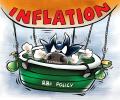
The Reserve Bank of India (RBI) has marginally raised its retail inflation forecast for the current fiscal year (FY27) to 5.2 per cent from 5 per cent, citing increasing price pressures across various commodities. Concurrently, the Monetary Policy Committee (MPC) unanimously decided to hike the key interest rate (repo) by 25 basis points to 5.5 per cent, shifting its stance to 'calibrated tightening'.

Wholesale price inflation (WPI) softened to 0.13 per cent in September on easing in prices of food articles and manufactured items, government data showed on Tuesday. WPI-based inflation was 0.52 per cent in August and 1.91 per cent in September last year.

Indian benchmark indices Sensex and Nifty closed lower, snapping a three-day rally, as retail inflation surged to 6.09 per cent in October, breaching the RBI's upper tolerance limit and prompting economists to anticipate a policy rate hike next month.

India's consumer price index (CPI)-based retail inflation rate is likely to have cooled further in June, thus remaining below the 4 per cent target of the Reserve Bank of India (RBI) for a fifth consecutive month, giving the central bank wiggle room to focus on growth. Economists reckon that the decline is on account of easing prices in various categories of goods, especially food items, and a favourable base effect.
Indian equity benchmark indices Sensex and Nifty slumped in early trade, ending a three-day rally, as profit-taking combined with concerns over surging retail inflation, which breached the Reserve Bank of India's upper tolerance limit, leading to anticipation of a policy rate hike. Track Sensex, Nifty on November 13.

Ahead of the seven-phase Lok Sabha elections, keeping food prices under check has emerged as one of the topmost priorities for the government. Food prices would likely have a bearing on the preferences of voters. In the past, there have been instances when governments have been voted out over rising food inflation.

Rockstar Games' Grand Theft Auto VI has finally launched after a 13-year wait, igniting massive excitement across the global gaming community. The game, available on PlayStation 5 and Xbox Series X/S, returns players to the fictional Vice City with new protagonists Jason and Lucia.

ITC's non-cigarette divisions, including FMCG, agri, and paperboards, delivered strong growth in Q2FY27, significantly increasing their contribution to overall earnings and net revenues. This performance helped offset the continued pressure on the core cigarette business due to high taxation and declining volumes.

The Reserve Bank of India's Monetary Policy Committee (MPC) has indicated that rate cuts are improbable in the near term, with headline inflation projected to reach 6 per cent in the third quarter. Minutes from the October meeting reveal growing concerns among members about inflation spreading beyond food and fuel, leading to a shift in policy stance towards calibrated tightening.

Fast-moving consumer goods (FMCG) companies in India are committed to maintaining current prices through the festive season, despite facing increased commodity costs and geopolitical disruptions. This strategy aims to protect consumer demand and sustain volume growth, even as margins remain under pressure.

Shares of packaged food company Milky Mist Dairy Food Ltd listed with a premium of nearly 18 per cent against its issue price of Rs 140, reaching a market valuation of Rs 13,968.81 crore.

While price volatility is not inherently bad, commodity futures markets and hedge funds operating on these markets will help reduce price volatility. While price volatility is not inherently bad, commodity futures markets and hedge funds operating on these markets will help reduce price volatility.

Citing India's 7 percent GDP growth rate and low interest rates by the central bank (RBI), US President Donald Trump on Friday (local time) criticised the American central bank for keeping borrowing costs high, arguing that the US economy could achieve growth of 15 to 20 per cent if interest rates were lowered.

'The ethanol blended with petrol programme should not be halted or reconsidered.' 'India is not experiencing a structural sugar shortage, and the ethanol blending roadmap does not compete with food security or drive domestic price increases.'

The Indian government has imposed stockholding limits on bulk sugar consumers, restricting them to a 15-day supply if they use over 10 tonnes monthly, effective September 1 to November 30, to stabilise prices ahead of the festival season.

The main culprit behind this cost escalation are rising prices of sugar and milk that go into making the sweets.

Temple, a wearable startup by Zomato co-founder Deepinder Goyal, is facing significant scientific scrutiny from doctors regarding its Rs 85,000 forehead-worn device. Critics question the evidence behind its claims of measuring brain blood flow and providing insights into ageing, with prominent hepatologist Cyriac Abby Philips calling it a "scam." Goyal has defended the technology, stating it's a fitness and wellness device, not medical, and that metrics await clinical validation, while also addressing pricing and scientific methodology.

Moody's Ratings has sharply increased India's GDP growth forecast for fiscal 2026-27 to 7 per cent, making it the fastest among G20 economies, driven by economic resilience despite the Middle East conflict. However, the agency flagged significant inflation risks stemming from elevated oil prices and potential El Nino disruptions.

The crispy home-made snack goes well with a hot cup of chaaya, kaapi or kattan or black tea/coffee, says Divya Nair.

The Reserve Bank on Friday raised the inflation projection for current fiscal year to 4.8 per cent from 4.5 per cent with Governor Shaktikanta Das saying lingering food price pressures are likely to keep headline inflation elevated in the December quarter. Consumer price index (CPI)-based inflation increased sharply in September and October 2024 led by an unanticipated increase in food prices.
Economists widely anticipate the Reserve Bank of India's Monetary Policy Committee will increase the repo rate by 50 basis points, likely split between the October and December meetings, as retail inflation is projected to peak at 6.1 per cent in the third quarter, exceeding the RBI's tolerance limit.

Madhya Pradesh Minister Kailash Vijayvargiya has ignited a political firestorm with his controversial remarks suggesting sugar should be "very expensive" and avoided by those over 40, drawing sharp criticism from the opposition amidst rising inflation concerns.

'If 5% of the total revenue was spent on LPG (pre-war), it is now expected to double. The overall food cost in restaurants is expected to rise by 4-6%.'
